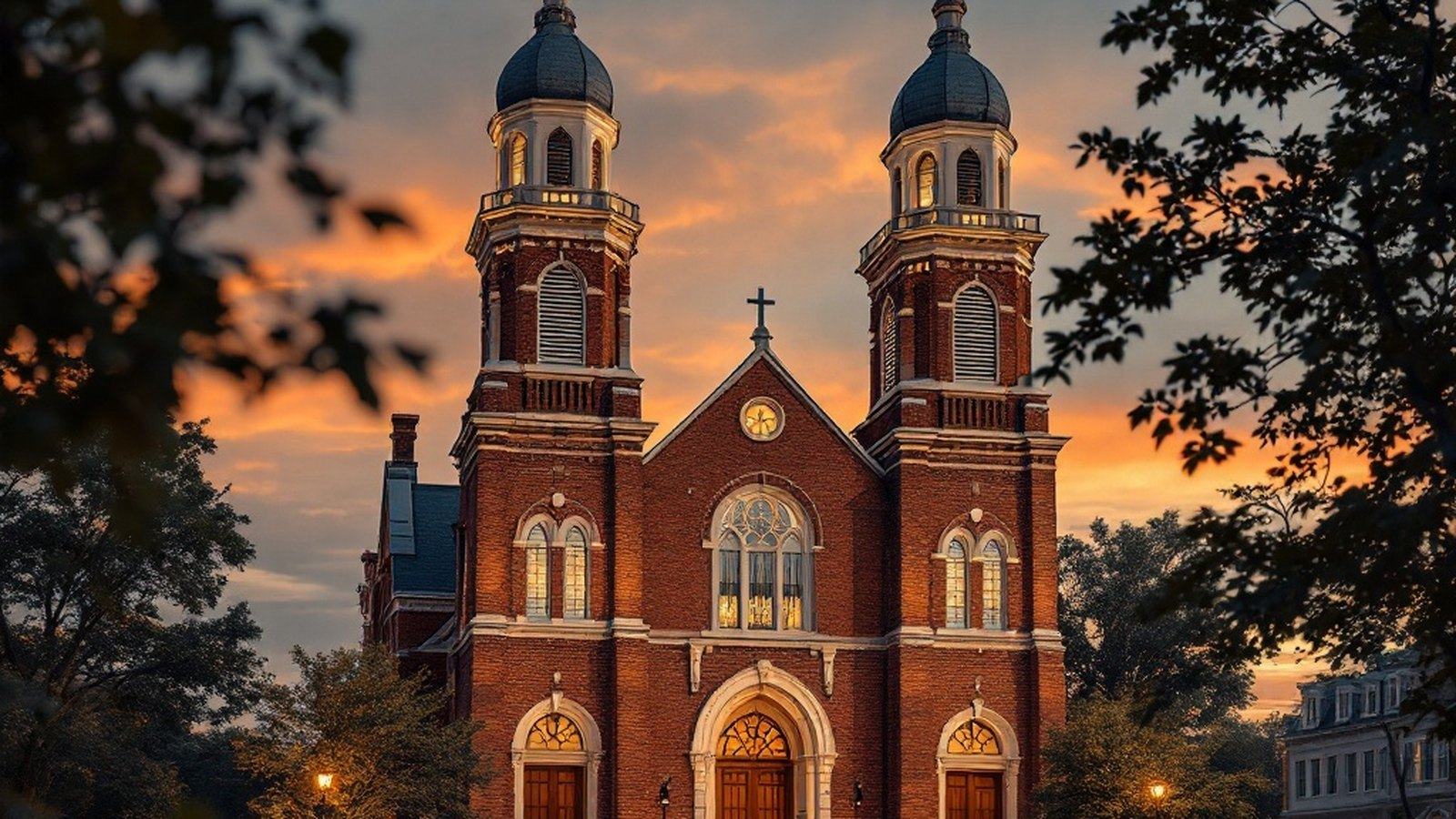
The sanctuary where four girls died on a September morning in 1963 — and where a movement found its moral center.
IA Building and Its Meaning
Completed in 1911, Sixteenth Street Baptist Church rises at the corner of Sixteenth Street and Sixth Avenue North in downtown Birmingham, Alabama — a confident Romanesque Revival structure in red brick, twin domed towers flanking a facade that announces civic permanence. From its earliest decades, the congregation served as a gathering place for Birmingham's Black professional and working community, and the sanctuary's size made it a natural assembly hall for mass meetings.
At a glance
- Completed
- 1911
- Tradition
- Baptist
- Place
- 16th St & 6th Ave N, Birmingham
- Status
- National Historic Landmark
By the early 1960s it had become the organizational headquarters of the civil-rights movement in Birmingham. Organizers working the freedom movement used its basement and its broad nave to train marchers in nonviolent discipline, brief activists before they walked into confrontation, and sustain the moral energy that Fred Shuttlesworth and national leaders needed to keep campaigns alive. The church stood directly across Kelly Ingram Park, making it the literal staging ground for the 1963 Children's Crusade — the extraordinary strategy of placing young people at the front of street demonstrations that finally broke the segregationist resistance of Bull Connor's Birmingham.
On the morning of September 15, 1963, a dynamite bomb planted beneath the church's east steps detonated during Sunday school. Addie Mae Collins, Cynthia Wesley, Carole Robertson, and Carol Denise McNair — ranging in age from eleven to fourteen — were killed. Fourteen additional people were injured. The attack provoked national and international outrage that accelerated support for what would become the Civil Rights Act of 1964.
Today the church remains an active congregation and a registered National Historic Landmark. Heritage visitors will find a permanent memorial exhibition inside, and the building itself — restored following the bombing and again in the 1990s — reads as both wound and witness. The stained-glass window donated by the people of Wales, depicting a Black Christ with arms outstretched, repays quiet attention.