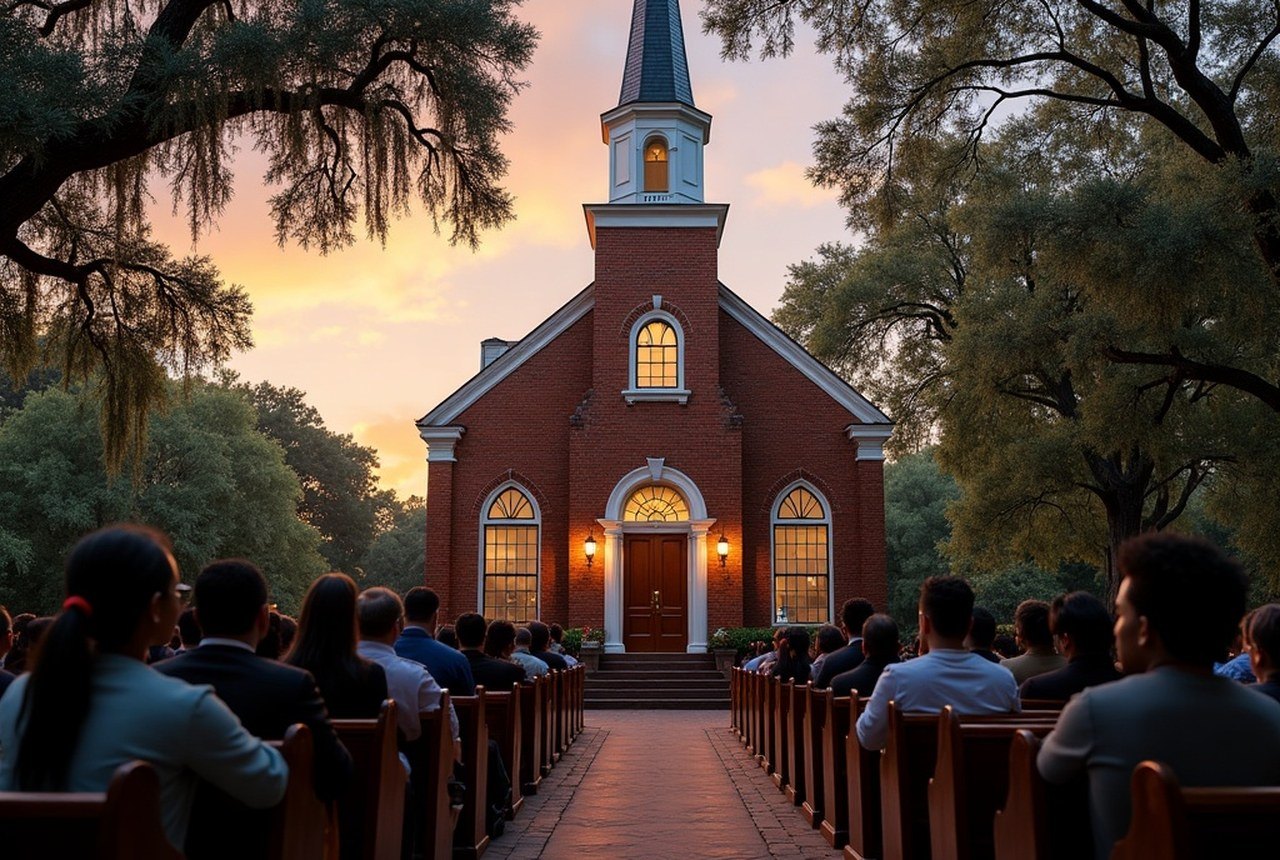
One of the oldest Black congregations on the continent — and the floor beneath your feet tells its first secret.
IA Church That Predates the Nation
Founded in 1773 by a formerly enslaved man named George Liele, First African Baptist Church of Savannah holds a strong claim to being the oldest African American congregation in continuous existence in North America. Liele, a gifted preacher licensed by a white Baptist church in Burke County, Georgia, began gathering Black worshippers — enslaved and free — before the Revolution had even concluded. When Liele eventually emigrated to Jamaica, his convert Andrew Bryan carried the congregation forward, enduring beatings and imprisonment to do so. Bryan's perseverance gave the church its permanence.
At a glance
- Founded
- 1773
- Tradition
- Baptist
- Place
- Franklin Square, Savannah
- Sanctuary
- Greek Revival brick, 1859
The congregation moved several times before settling into its current home on Franklin Square, a handsome Greek Revival brick building completed in 1859. The sanctuary's symmetry and solid masonry speak quietly of hard-won self-determination — it was built largely by its own members, many still enslaved, who donated their earnings one coin at a time.
IIWhat the Floor Remembers
Visitors who look down in the sanctuary notice something unusual: the floorboards are pierced with a pattern of small geometric holes. The design is not decorative. According to the church's own recorded history, the floor served as a ventilation system for a hiding place beneath it — a space used to shelter freedom seekers moving along routes toward the North. The holes allowed those hidden below to breathe. It is one of the most viscerally powerful details in any historic sanctuary open to the public in the American South.
The building also preserves antebellum-era pews and original gallery seating — the same galleries where enslaved Savannahians once sat at the margins of white-controlled churches before this congregation gave them a place entirely their own.
First African Baptist draws heritage travellers, scholars, and pilgrims in equal measure. Guided tours run regularly and are led with care and historical directness. The church remains an active congregation, so visitors are asked to check schedules before arriving. To stand inside it is to stand at the headwaters of an entire tradition — the invisible church made permanent in brick and memory.