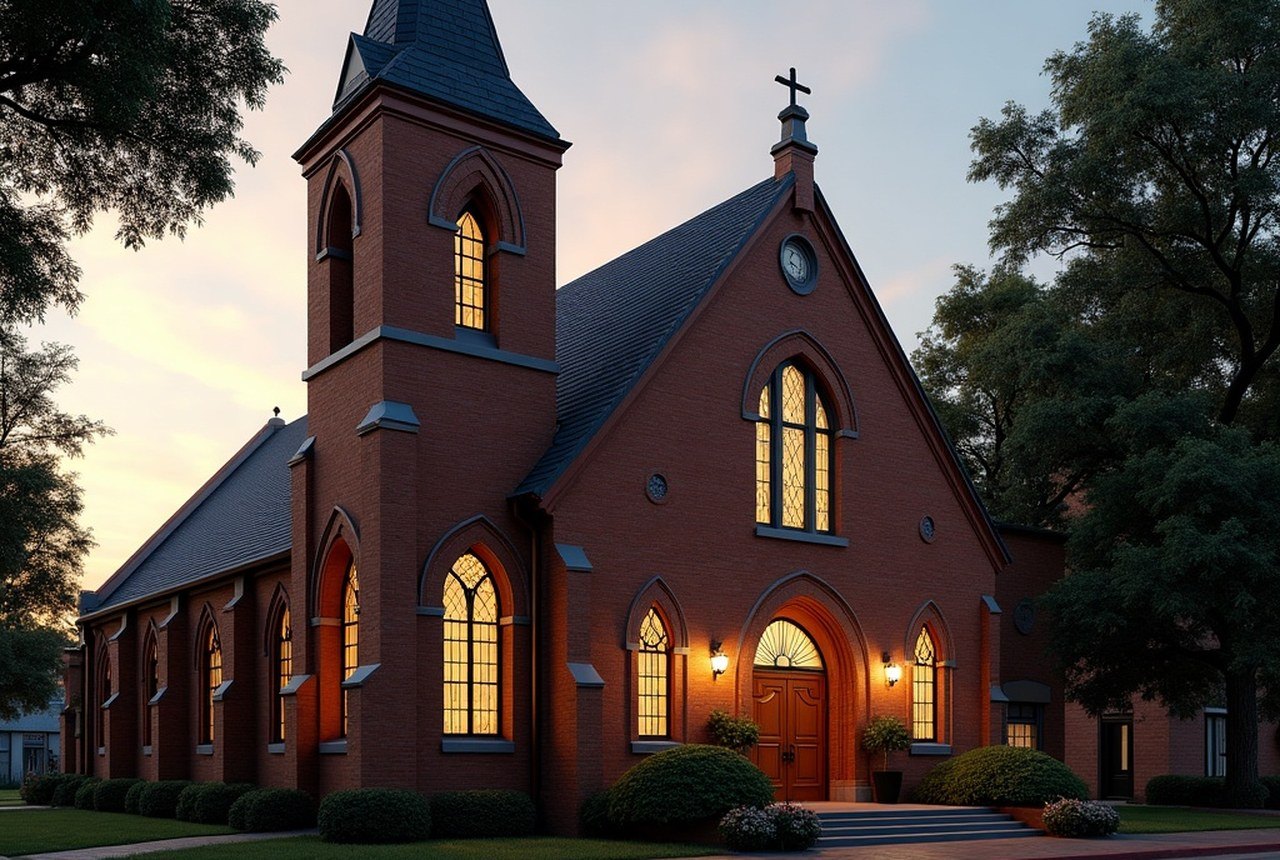
The Philadelphia congregation where Richard Allen purchased a plot of earth and built a church — and, in doing so, founded an entire denomination.
IThe Cradle of the A.M.E. Church
In 1787, Richard Allen and Absalom Jones walked out of St. George's Methodist Episcopal Church in Philadelphia after white ushers pulled them from their knees during prayer. The insult was clarifying. Allen, a formerly enslaved preacher who had purchased his own freedom, was already convinced that Black Christians needed a church of their own. He purchased a lot at Sixth and Lombard Streets, moved a blacksmith's shop onto the land, and in 1794 dedicated it as Bethel African Methodist Episcopal Church.
At a glance
- Founded
- Bethel A.M.E. dedicated 1794
- Tradition
- African Methodist Episcopal
- Place
- Sixth & Lombard Streets, Philadelphia
- Sanctuary
- Current building, 1890
The congregation's early decades were marked by legal battles as well as worship. Allen fought off repeated attempts by white Methodist leaders to seize Bethel's property and subordinate its membership. Victory in the Pennsylvania Supreme Court in 1816 secured the congregation's autonomy — and in that same year, Allen convened representatives from several independent Black churches in Philadelphia to establish the African Methodist Episcopal Church, the first fully independent Black Protestant denomination in the United States. Allen became its first bishop.
The current building, the fourth to occupy the site, dates to 1890. It sits on what is believed to be the oldest parcel of land continuously owned by African Americans in the country. Beneath the sanctuary lies a museum holding Allen's tomb and artifacts tracing the church's history from the era of the invisible church forward. Mother Bethel also served as a station on the Underground Railroad, sheltering freedom seekers moving north.
For heritage travellers, Mother Bethel is not merely a congregation — it is the constitutional ground of an institution that today spans the globe.