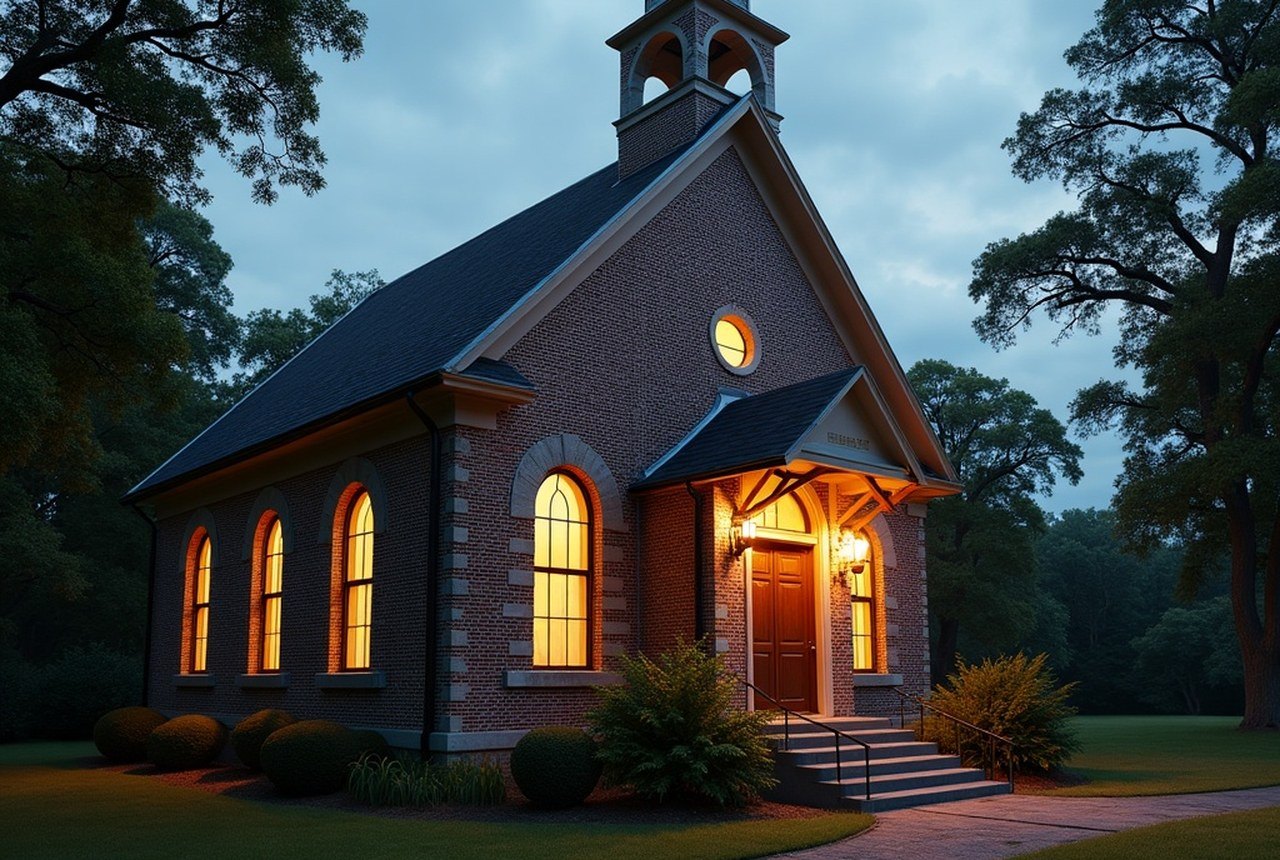
Why historic Black church buildings are at risk — and who is fighting to preserve them.
IThe Weight of History in Aging Walls
A congregation that has worshipped in the same sanctuary for a century or more carries something irreplaceable inside those walls. Yet across America, hundreds of historic Black church buildings face slow collapse — victims of deferred maintenance, shrinking memberships, rising insurance costs, and the simple arithmetic of aging structures. The problem is quiet, chronic, and largely invisible to the wider preservation world.
The reasons run deep. Many of these congregations built their sanctuaries with community labor and donated funds during eras when Black Americans were systematically excluded from bank loans and government programs. Decades later, those same buildings sit outside the mainstream preservation pipeline. National Register listing helps in principle, but tax credits designed to encourage rehabilitation favor commercial developers, not small nonprofits holding sacred ground. Grant cycles move slowly; roofs do not wait.
The losses are real. When a historic Black sanctuary burns, floods, or simply falls beyond saving, a node of civil-rights history, community memory, and architectural craft disappears permanently. The hand-carved pews, the stained glass commissioned from Black artisans, the acoustic room shaped over generations for the sound of a mass choir — none of it can be reconstructed from a photograph.
But preservation work is happening. Organizations such as the African American Cultural Heritage Action Fund, a program of the National Trust for Historic Preservation, have directed millions of dollars specifically toward Black historic places, including churches. State preservation offices in Georgia, South Carolina, and Virginia have developed targeted programs recognizing the concentration of nationally significant Black congregations in their borders. Smaller community-based coalitions do the unglamorous work: emergency stabilization grants, volunteer roof repairs, documentation before demolition.
For the heritage traveller hoping to visit these sanctuaries, the most useful act is also the simplest — go, and go soon.