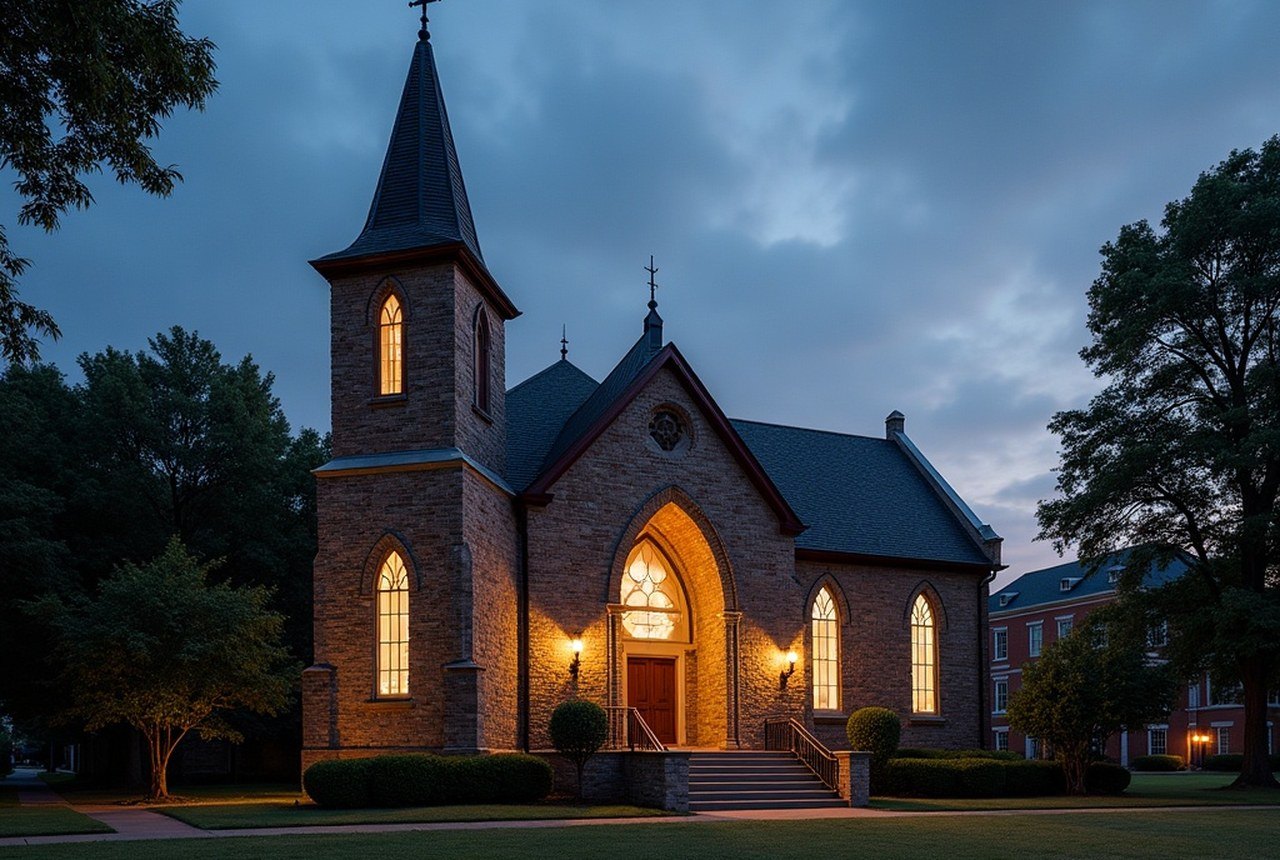
When the movement needed a place to gather, it turned to the one institution that already belonged to the people.
IThe Sanctuary as Headquarters
No institution did more to sustain the civil-rights movement than the Black church. It was the one space the community already owned — the building, the land, the deed. When organizers needed a hall to plan a march, a platform to address hundreds, or a shelter to protect those who had been beaten, they turned to the sanctuary. The church received them all.
This was not new territory. From the abolitionist meetings of the nineteenth century through Reconstruction, the Black church had always doubled as a civic hall. The freedom movement of the mid-twentieth century inherited that tradition wholesale, and the long thread between faith and social change stretched taut in those years. Mass meetings — the rhythmic, charged gatherings that kept momentum alive between campaigns — were almost always held inside church walls. Montgomery, Birmingham, Selma: in each city, congregations opened their doors before any march was planned, and kept them open after the cameras left.
Sixteenth Street Baptist Church in Birmingham became the starkest symbol of what that commitment cost. Bombed on a Sunday morning in September 1963, it was a congregation doing what congregations had always done — and the violence directed at it confirmed, to the movement and the watching world, exactly how high the stakes were.
What made the church irreplaceable was the combination it offered: legitimate assembly, moral authority, and music. A mass meeting did not simply inform; it steeled nerve and unified will. The preacher called; the crowd responded. Freedom songs — many of them spirituals in new dress — moved through those rooms the way they had moved through hush harbors a century before, carrying courage from voice to voice. The sanctuary was not a backdrop to the movement. It was the movement's engine room.