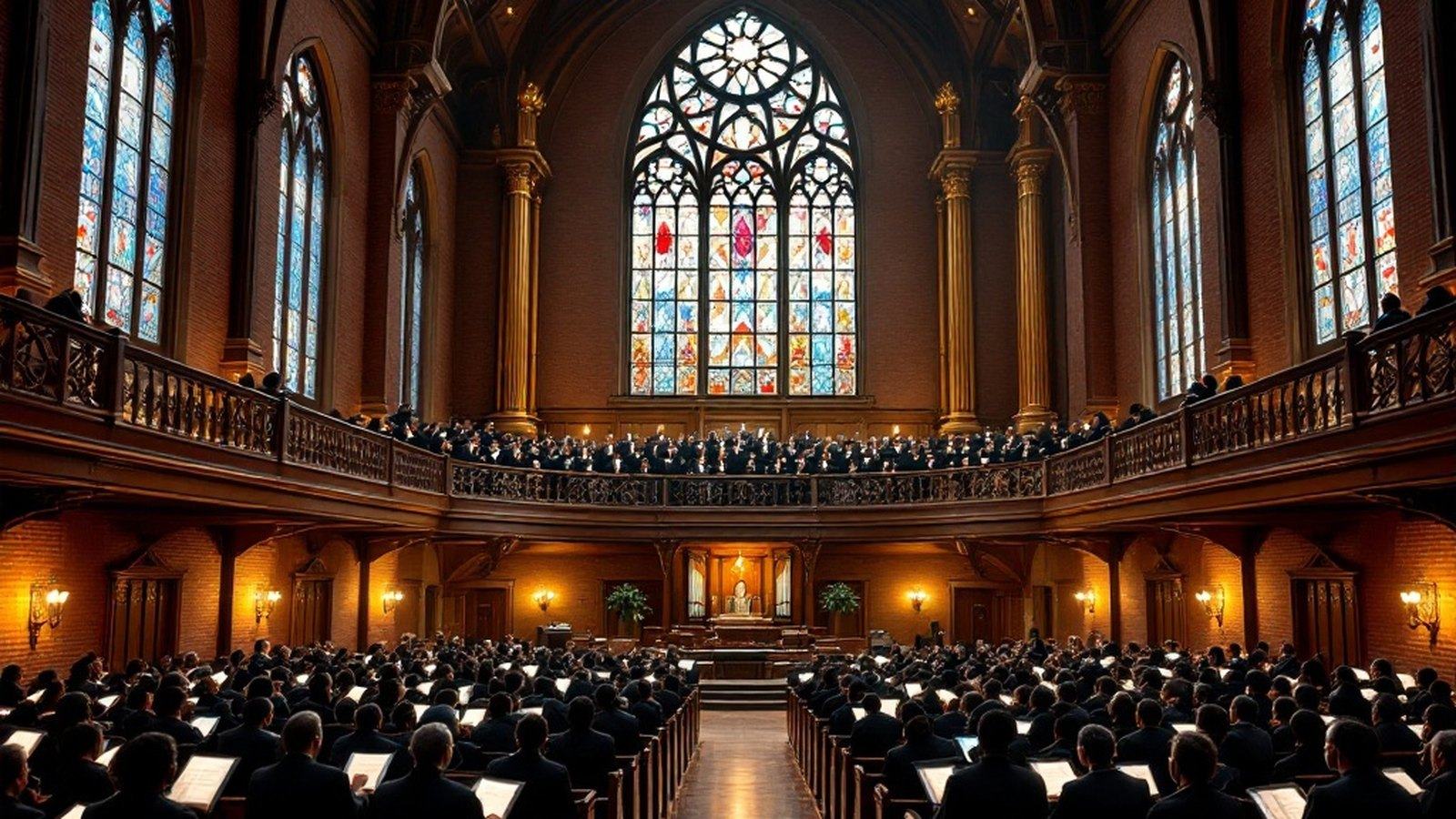
From the hush harbor to the historic sanctuary — the sweep of a tradition that shaped a people, a movement, and a nation.
IRooted Before There Were Walls
The Black church did not begin with a building. It began in the woods, in the dark, in the hush harbors — those stolen clearings where enslaved people gathered out of earshot of enslavers to sing, pray, and preach in defiance of every law designed to silence them. Pots were turned upside down to muffle sound. Voices were lowered, then raised. The worship that flourished in those hidden spaces carried a theology forged under duress: a God who saw suffering, a Promised Land that was not metaphor alone, a community bound tighter by the pressure placed against it.
From those beginnings emerged something extraordinary. The spirituals — sorrow songs threaded with coded resistance and genuine faith — gave the tradition its first distinctive sound. The folk sermon, improvised and oral, gave it its first oratorical form. Call-and-response, the oldest surviving structure from West African communal worship, wove preacher and congregation into a single body of expression. None of these were accidents. They were the adaptive genius of a people denied literacy, property, and legal personhood, who nonetheless built a rich interior civilization and then, when they could, brought it into the open air.
IIA Church of Their Own
The turn came in the cities of the North, and the catalyst was indignity. In 1787, Richard Allen and Absalom Jones were pulled from their knees at St. George's Methodist Episcopal Church in Philadelphia — escorted away, mid-prayer, to segregated seating. Allen's response was not to leave the faith but to claim it fully. He founded what would become Mother Bethel African Methodist Episcopal Church, and in 1816, the A.M.E. Church was organized as the first Black denomination in the United States — the first institution a free people built entirely for themselves.
The denominations that followed — the African Methodist Episcopal Zion Church, the National Baptist Convention, and others — were not merely ecclesiastical bodies. They were the infrastructure of a society that white America refused to build for Black Americans. Mother Bethel in Philadelphia became the prototype: a congregation that sheltered freedom seekers, educated children, and organized political resistance all under one roof. First African Baptist Church in Savannah, founded in the eighteenth century by an enslaved man named Andrew Bryan, demonstrated that independent Black religious life had roots even in the Deep South, even under slavery's most brutal reach.
By the time of the Civil War, the Black church was the one institution Black Americans held in something approaching their own hands. When emancipation came, the church was ready. Denominations sent missionaries South. Congregations opened schools. Preachers moved into school houses by day and returned to the pulpit by night. The Reconstruction era — brief, brilliant, and violently reversed — saw the Black church anchor the entire project of building a free Black civic life in a hostile nation.
IIIMigration, Music, and the City
The Great Migration remade American geography and remade the Black church along with it. Between roughly 1910 and 1970, more than six million African Americans moved from the rural South to the urban North and West, carrying their faith traditions with them — and depositing them into storefronts, then rented halls, then grand sanctuaries in cities that had never seen anything like them. Olivet Baptist Church on Chicago's South Side became one of the largest Protestant congregations in the country during this period, a switchboard for the newly arrived.
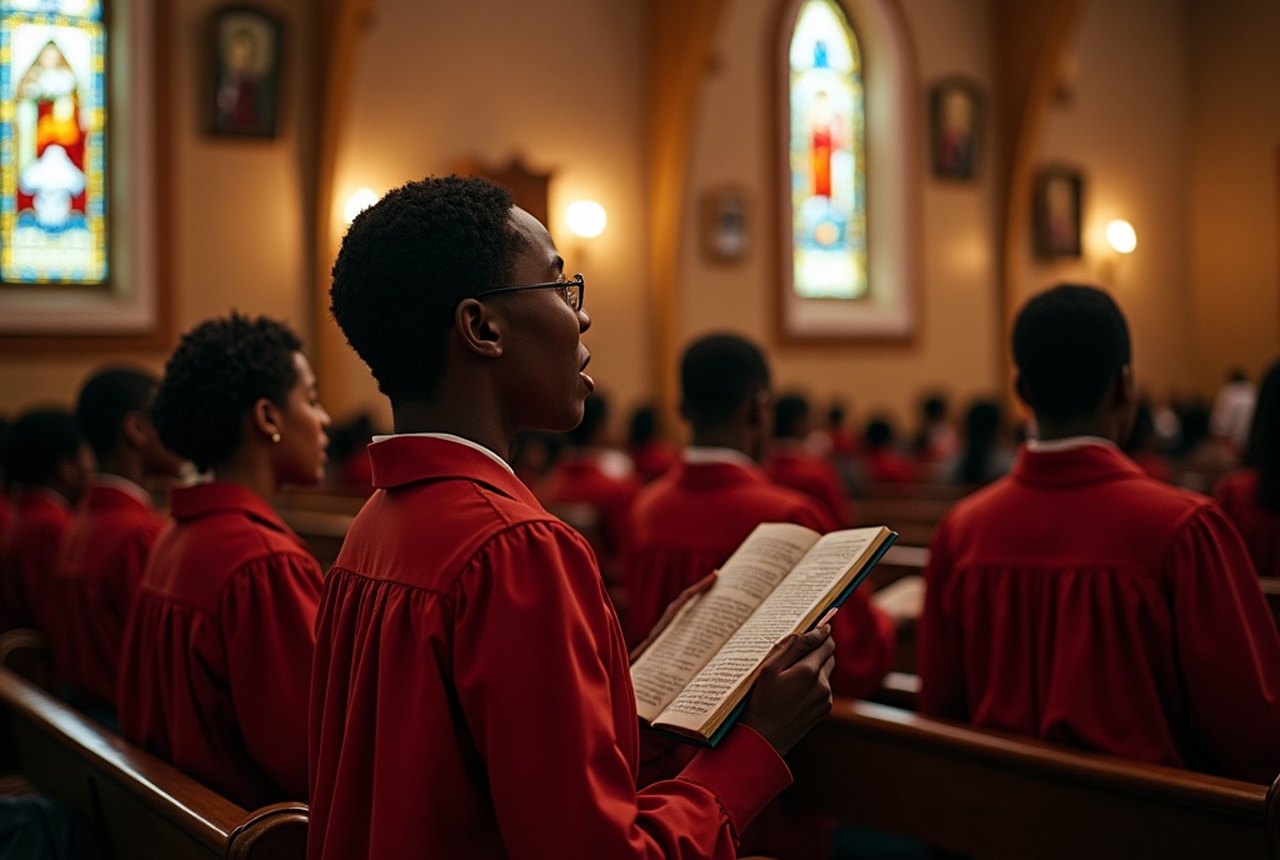
It was in those storefront churches — the marginal, the cramped, the improvised — that something new was being born. Thomas A. Dorsey, a former blues pianist, fused the blue note and the gospel message into a sound that would become modern gospel music: emotionally direct, rhythmically insistent, and rooted in the unvarnished experience of Black urban life. Mahalia Jackson, who sang in Chicago's churches, carried that sound to concert halls and eventually to the steps of the Lincoln Memorial. The mass choir tradition, with its robed ranks and thunderous unison voice, became the sonic signature of the urban Black church — and one of the most recognizable sounds in all of American music.
The art forms and the institution fed each other. A church with a great choir drew more members. More members meant more resources, more programs, more political weight. The preacher stood at the center of it all — not only as a spiritual guide but as the most powerful public voice a community often had. The Black pulpit produced some of the most consequential oratory in American history, and the formal art of that preaching — the chanted close, the structuring of Scripture into felt experience — remains one of the unsung high achievements of American culture.
The church did not merely support the movement; in many places, it was the movement.
IVThe Freedom Church
When the civil-rights movement needed a home, the church was already there. Sanctuary floors became meeting halls. Choir lofts sent freedom songs out open windows. The tradition of the church as an organizing center and site of political courage stretched back to Reconstruction, but the mid-twentieth century gave it its most visible expression. Sixteenth Street Baptist Church in Birmingham became both a headquarters for movement strategy and, after the bombing of September 1963, a symbol of what the movement was ultimately confronting. Abyssinian Baptist Church in Harlem — under Adam Clayton Powell Jr. — demonstrated how the pulpit could be leveraged into electoral power and Congressional representation. The church did not merely support the movement; in many places, it was the movement.
That legacy continues to shape what the Black church is asked to be: institution, conscience, community anchor, cultural conservatory all at once. The pressures on historic congregations today are real — shrinking memberships in some cities, the urgent challenge of preserving aging sanctuaries, the ongoing question of how traditions born of one kind of crisis speak to those of another. These are not signs of a tradition in decline so much as the latest in a long series of adaptations that have always defined it.
VA Living Archive
Visiting a historic Black church is not the same as visiting a museum. The archive is alive: in the choir, in the sermon, in the handshake at the door. Heritage travellers who approach these sanctuaries — many of them now on marked heritage trails — are entering spaces where American history was not merely witnessed but made. The walls hold it, and so do the people. That is the double inheritance this tradition offers: a record of what was endured, and an ongoing demonstration of what was built from it.
- 1770sFirst African Baptist Church is gathered in Savannah — among the oldest Black congregations in North America.
- 1787 · 1816Richard Allen and Absalom Jones leave St. George’s in Philadelphia; the A.M.E. Church is organized as the first Black denomination.
- c. 1910–1970The Great Migration remakes Black church life in the cities of the North and West.
- 1930s–40sModern gospel music takes shape in Chicago’s churches.
- 1963The Sixteenth Street Baptist Church bombing steels a movement.