How a walk-out from a Philadelphia gallery became the founding act of an entire denomination — and why independent Black congregations remade American religious life.
IRefused at the Rail
The story begins with an insult. On a November Sunday in 1792, Richard Allen and Absalom Jones were kneeling in prayer at St. George's Methodist Episcopal Church in Philadelphia when white trustees physically pulled them to their feet and directed them to the segregated gallery. They rose, walked out, and did not return. It was one of the decisive exits in American history.
Allen and Jones had already been building something before that morning. In 1787 they had co-founded the Free African Society, a mutual-aid and quasi-religious organization that gave Philadelphia's free Black community a gathering place outside white institutional control. The walkout at St. George's crystallized what the Society had always implied: that genuine spiritual life and genuine dignity could not coexist under a roof where Black worshippers were managed, redirected, and refused. The congregation a free people needed, they would have to build themselves.
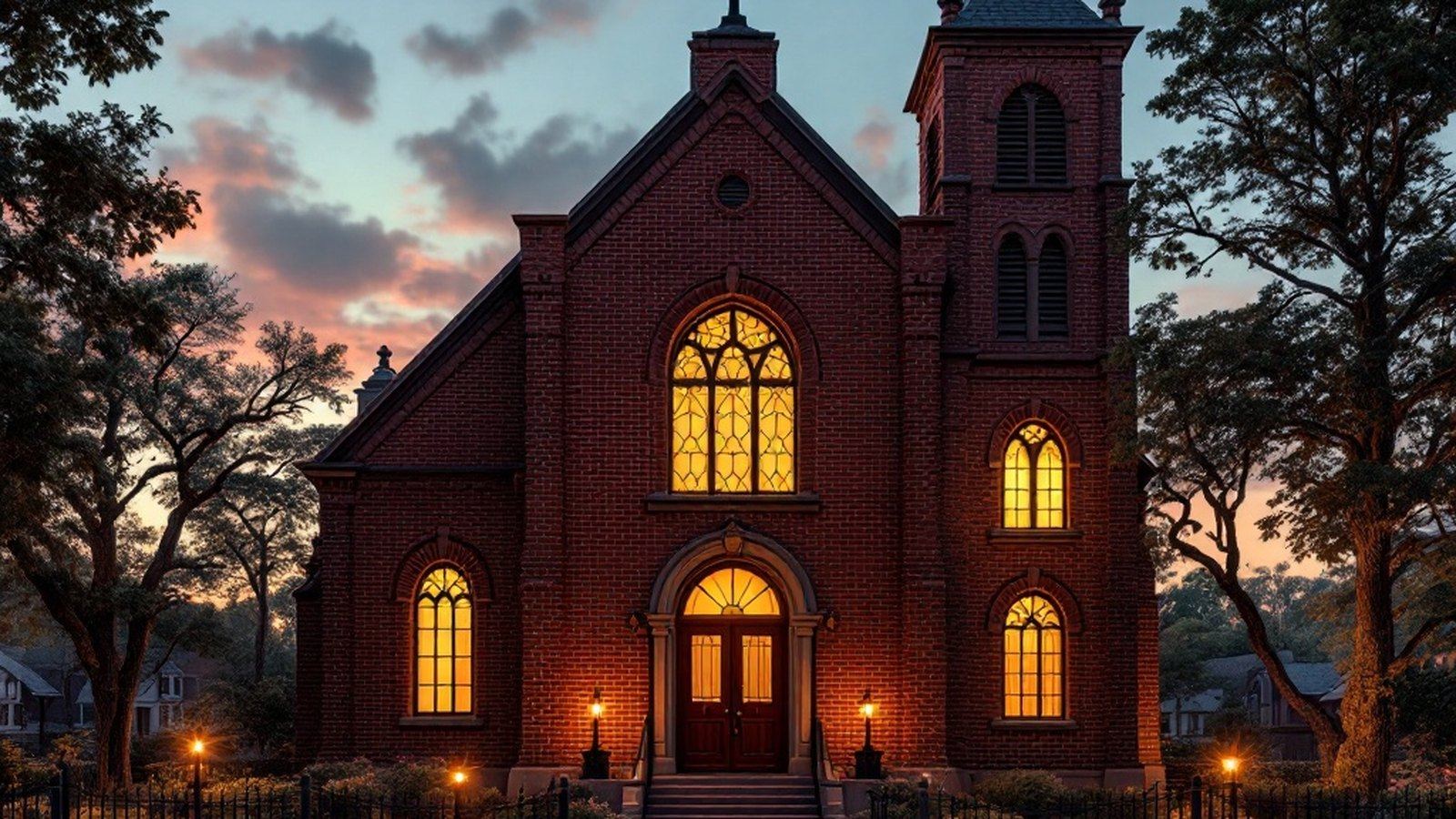
Jones went on to found St. Thomas African Episcopal Church; Allen's path led somewhere more consequential still. In 1794 he dedicated Bethel African Methodist Episcopal Church on Sixth Street in Philadelphia — a building he had purchased, moved to the site, and refurbished largely with his own money. Pennsylvania's courts confirmed the congregation's independence from white Methodist oversight in 1816, and that same year Allen convened representatives of several Black Methodist congregations to form the African Methodist Episcopal Church, the first independent Black denomination in the United States. Mother Bethel A.M.E. still stands on that ground today, the oldest parcel of real estate continuously owned by African Americans in the nation.
IIThe Baptist Parallel
The A.M.E. organizing moment was dramatic and well-documented, but the Black Baptist tradition had been quietly taking root even earlier, and along a different path. Baptist polity required no central hierarchy to authorize a congregation — a covenant among believers was enough — which made independent Black Baptist churches possible even under slavery.
First African Baptist Church in Savannah, gathered in the 1770s under the preaching of George Liele and Andrew Bryan, is among the oldest Black Christian congregations documented on American soil. Bryan endured imprisonment and flogging to keep his congregation alive; the church survived. Across the South and the North alike, Black Baptist congregations multiplied through the early nineteenth century, each essentially self-governing, bound to no white structure for its legitimacy. The National Baptist Convention — the largest Black denomination in America — would eventually emerge from this current, organized in 1886 and formally consolidated in 1895.
What the Baptists achieved through local autonomy, the A.M.E. achieved through deliberate institutional architecture. Together these two streams established the pattern that would define the Black church tradition for the next two centuries: a people's institution, accountable to its congregation and community rather than to any external white authority.
IIIWhat Independence Made Possible
The significance of denominational independence went far beyond ecclesiastical structure. A church a community owned outright could do things no rented gallery or supervised mission chapel could do. It could school children when public education was denied or degraded. It could hold political meetings when no other hall would open its doors. It could publish newspapers, coordinate mutual aid, raise funds for the freedom movement, and shelter people in transit on the Underground Railroad. The pulpit became, from the beginning, a site of communal power as much as spiritual nourishment — a tradition explored more fully in the history of the preacher in the community.
Richard Allen himself understood this completely. Ordained as the A.M.E.'s first bishop, he used Bethel as an organizing hub, a way station for freedom seekers, and a platform from which to oppose the American Colonization Society's scheme to remove free Black Americans to Africa. The church he founded was never merely a house of worship. It was — from its first morning — an act of self-determination.
The congregations born in those decades, North and South, formal and storefront, Methodist and Baptist, all carry that original charge. To enter one of these historic sanctuaries is to stand inside a decision that changed American life.