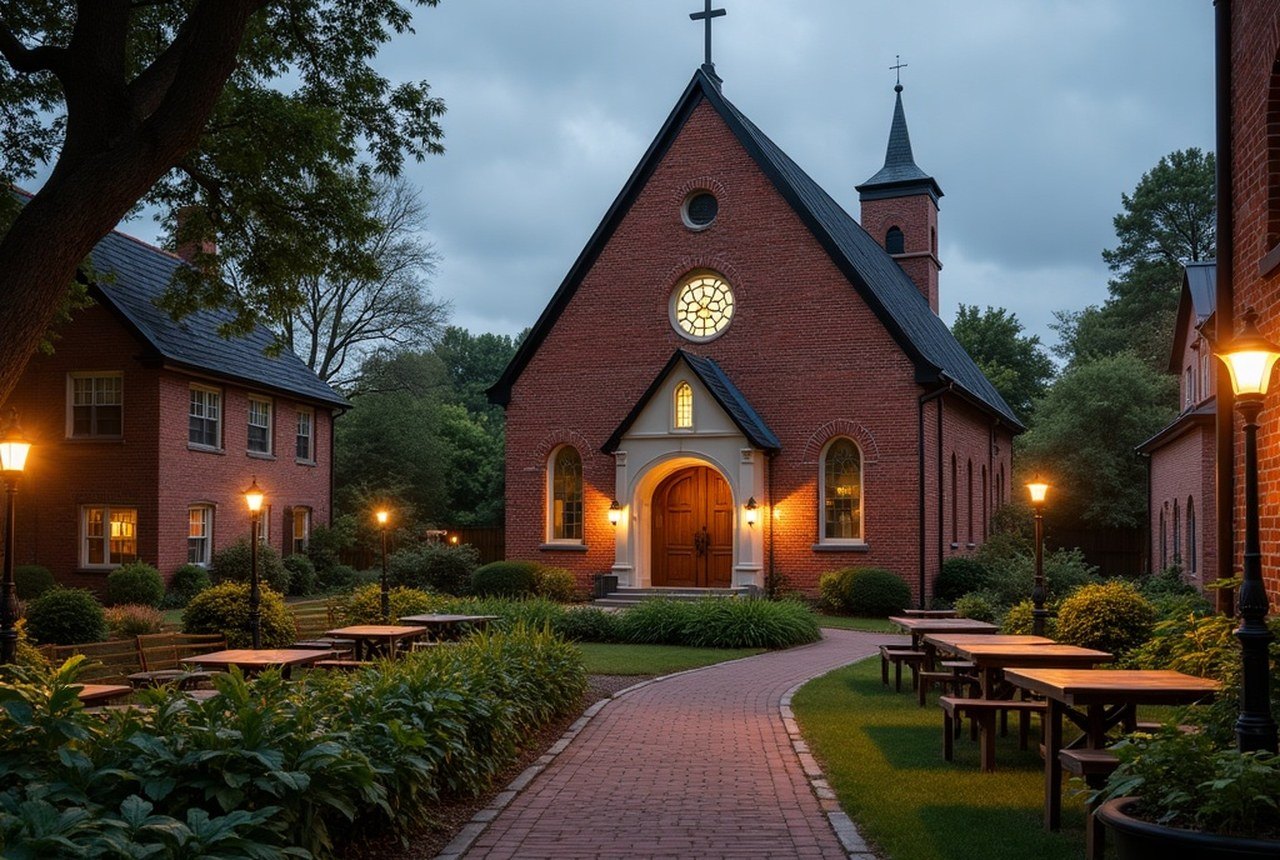
How the Black church's oldest ethic — communal uplift — continues to shape the programs, priorities, and purpose of congregations across America.
IThe Congregation as Community
Long before municipal governments provided social services, the Black church was the institution a free people built first. It ran schools in its basement, extended credit through benevolent societies, and organized mutual aid networks that kept families from falling through the cracks. The guiding ethic was never merely personal salvation — it was collective survival. The congregation existed to raise not just its members but the whole village around it.
That ethic is as old as the tradition itself. When Richard Allen founded Mother Bethel in Philadelphia and the A.M.E. Church took institutional form in 1816, the language of uplift was woven into its founding purpose. Congregations in the antebellum North sheltered freedom-seekers, taught literacy, and petitioned legislatures. After emancipation, Black churches across the South built schools when no public ones existed and established burial societies, insurance collectives, and credit pools that functioned as proto-banks. As the Black church became the anchor institution of community life, its programs were indistinguishable from its theology.
IIUplift in Practice
The Great Migration reshaped what uplift looked like in practice. Congregations like Olivet Baptist Church in Chicago absorbed tens of thousands of newcomers arriving from the rural South — connecting them to housing, employment, and a social structure in a city that was often openly hostile to their presence. The church hall became an employment bureau; the pastor's network became a navigation system for an unfamiliar world. The tradition did not change; the scale did.
Contemporary congregations carry that legacy into new contexts: food pantries and after-school tutoring, re-entry programs for the formerly incarcerated, health fairs addressing chronic illness in medically underserved neighborhoods, affordable housing developed on church-owned land. These are not departures from the spiritual mission — they are its most direct expression. In the Black church tradition, the sermon preached from the pulpit and the hot meal served in the fellowship hall are both acts of ministry.
The village, in this tradition, is not a metaphor. It is the actual neighborhood surrounding the sanctuary — the people who may never sit in the pews but whose lives the congregation considers its responsibility. Restoring that village, generation after generation, is the longest-running program in American religious life.