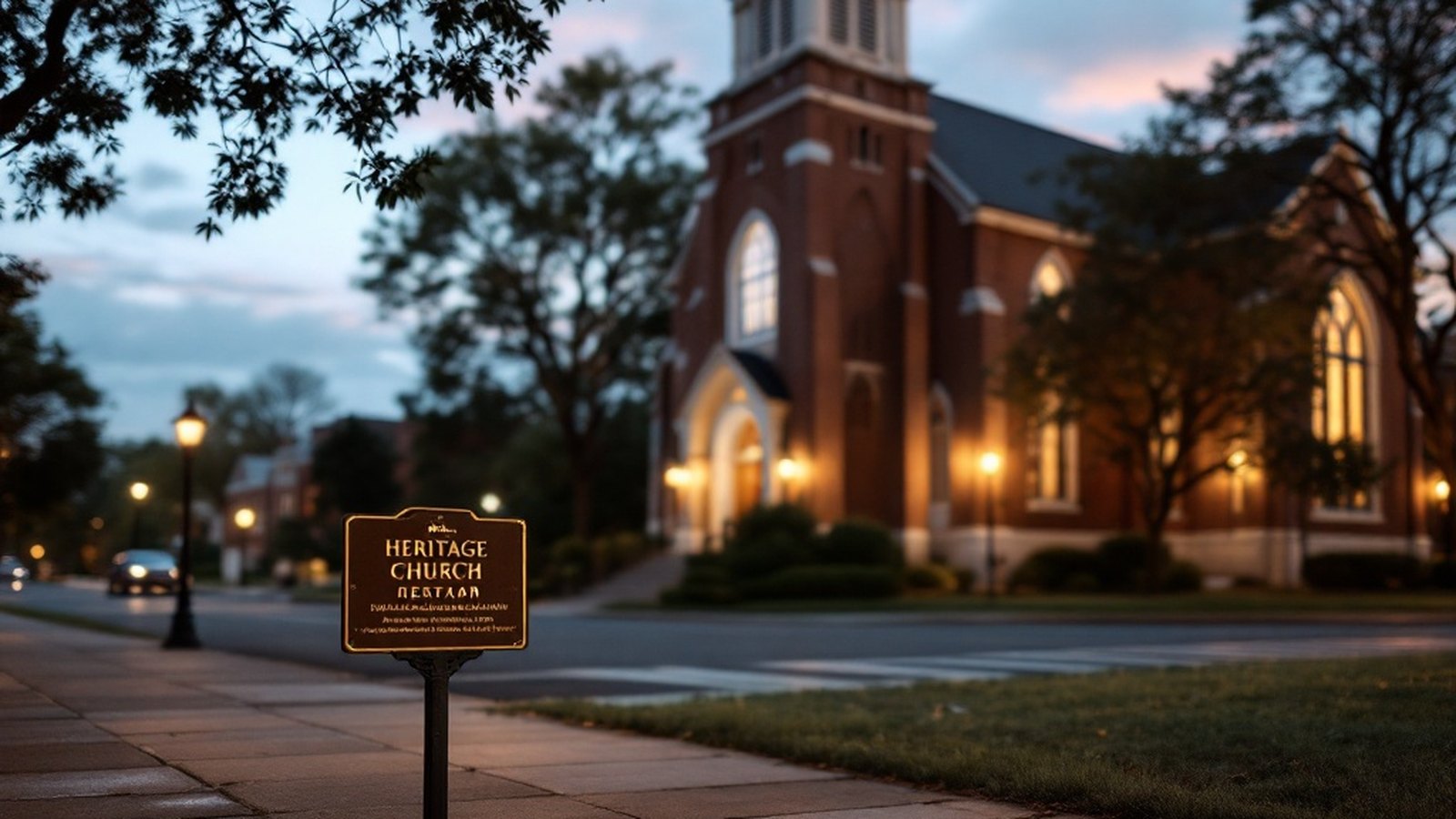
From Birmingham to Harlem, a network of civil-rights and church-heritage trails connects the most consequential sanctuaries in American history.
IWalking the Line
No historic Black church stands alone. Each sanctuary is a node in a larger web of community, struggle, and faith — and across American cities, formal heritage trails have begun to make those connections walkable. The U.S. Civil Rights Trail, established in 2018, links more than 100 sites across fifteen Southern states, and churches anchor it at every turn. Sixteenth Street Baptist Church in Birmingham sits at the moral center of that trail; First African Baptist in Savannah, founded in the eighteenth century, marks its deepest historical roots.
In the urban North, city-designated trails chart the geography of the Great Migration and its congregations. Chicago's Bronzeville neighborhood — once called the "Black Metropolis" — rewards on-foot exploration, with Olivet Baptist Church among the landmarks that defined South Side religious and civic life for successive waves of newcomers. Philadelphia's heritage corridor runs south through Germantown and Society Hill to Mother Bethel A.M.E. on Sixth Street, the mother church of an entire denomination, sitting on land that has been owned by African Americans continuously since 1791 — the oldest such parcel in the nation.
Harlem rewards the visitor who reads the streetscape carefully. The stretch of Adam Clayton Powell Jr. Boulevard above 125th Street passes Abyssinian Baptist Church and several smaller sanctuaries whose storefronts once incubated the birth of gospel music during the 1930s. State and city landmark designations protect some of these buildings; others remain vulnerable, dependent on congregations that are often small and aging.
The practical advice for heritage travellers is simple: anchor your visit to a designated trail or corridor, research opening hours before you travel — many historic sanctuaries welcome visitors only by appointment or on specific days — and read the architecture as well as the history. The building itself is evidence. Bullet holes, memorial plaques, stained glass commissioned in grief or defiance: these are primary sources that no archive can replace. For guidance on how to visit these sanctuaries with respect, the protocols matter as much as the itinerary.